Not for emergencies. If someone is seriously unwell or in immediate danger, call 999. For urgent medical help use NHS 111 or your local urgent-care route.
Display: Accessibility statement

A clearer way to record visible change

See change sooner. Support action earlier.

Healing Process helps people capture comparable photographs, follow change over time and have a useful conversation with the right care team before a concern becomes a bigger problem.
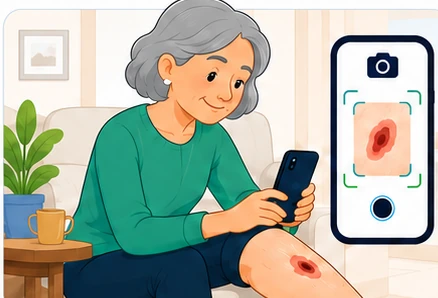
Original image retainedHuman review remains centralAccessible, inclusive design
Illustration of a person using Healing Process to photograph a visible skin concern
One regular routineSame area • similar angle • similar lighting • useful notes

First, know which mode applies

Your own record—or a service linked to your team

The screen must always make this distinction obvious. It changes who can see information and what response, if any, has been arranged.

Personal record

For your own reference

Build a dated record, compare photographs and prepare for an appointment.

  • No clinical team is automatically connected.
  • No guaranteed monitoring or response time.
  • You decide whether to export or share.
Understand personal mode
Provider-linked pathway

Shared under a local care arrangement

A participating service may place entries into a named review queue and use secure messages.

  • Provider-defined staff and response hours.
  • Local escalation and appointment routes.
  • Clear consent and information-sharing rules.
Understand linked care

The complete journey

Six steps that make every review more useful

The interface keeps the next action visible and uses everyday language throughout.

Choose your mode

Confirm whether this is private or linked to a named service.

Take a baseline

Capture the first clear photograph and record context.

Match the view

Use on-screen guidance for angle, distance, framing and light.

Compare safely

View the original beside a labelled aligned comparison.

Talk meaningfully

Describe the concern, answer questions and agree an action.

Review regularly

Close the loop with a decision, appointment or safety-netting.

A repeatable picture routine

Make the second photograph genuinely comparable

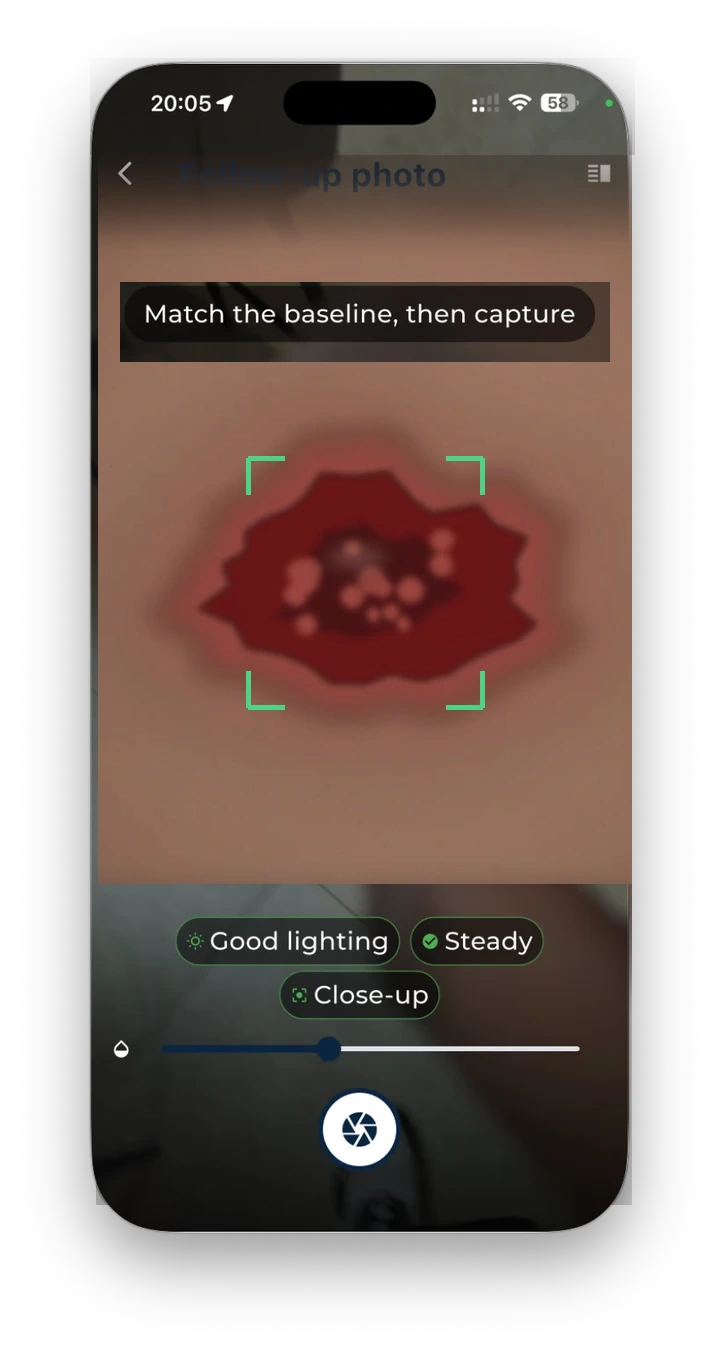
Healing Process should guide—not merely ask—the user to reproduce the first view.
  • 1
    Use the same area and orientation.
    Show a translucent outline or landmark guide from the baseline.
  • 2
    Match distance and angle.
    Use framing, tilt and distance prompts before the shutter activates.
  • 3
    Use even, natural light where possible.
    Warn about flash glare, deep shadow, blur or colour-cast.
  • 4
    Add a short note.
    Record pain, discharge, smell, heat, swelling, dressing changes and general wellbeing in the person’s own words.
Mobile screen showing guided wound photograph capture
Guided image captureClick or tap any image on this website to open a high-resolution full-screen view.

Transparent comparison

Align the view—never hide the original

The comparison layer should compensate for framing differences while preserving a complete audit trail.
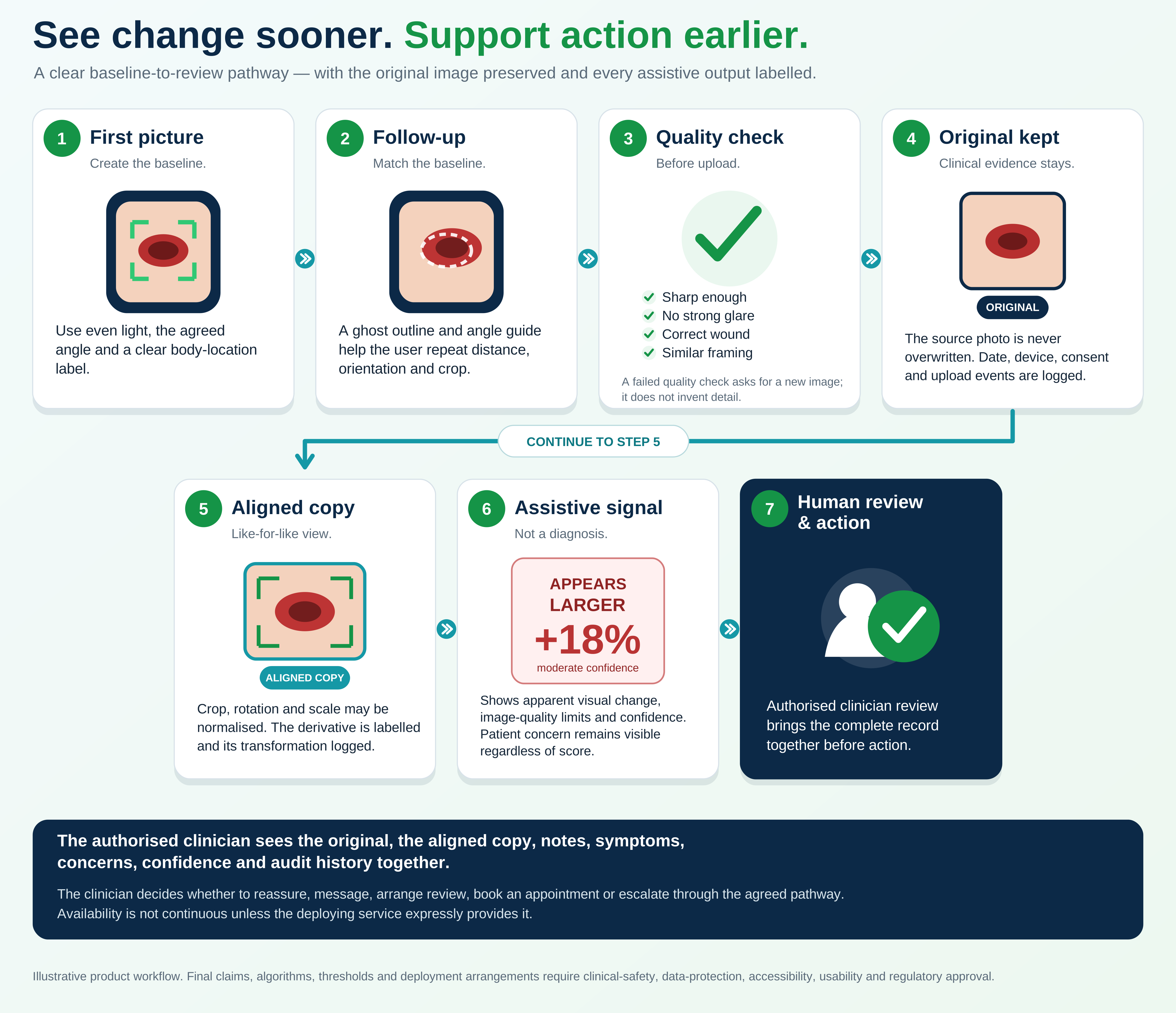
Clinical boundary: image alignment and comparison may highlight apparent visual change, but they do not diagnose infection, healing, deterioration or any condition. Originals stay available, confidence and limitations are shown, and a suitably qualified person makes clinical decisions.
Seven-step baseline-to-review workflow with image alignment, an enlarged assistive comparison and human review
Baseline-to-review comparison flowThe original baseline and follow-up remain available. Any aligned or normalised view is visibly labelled as a derivative and accompanied by quality and confidence information.

Conversations that lead somewhere

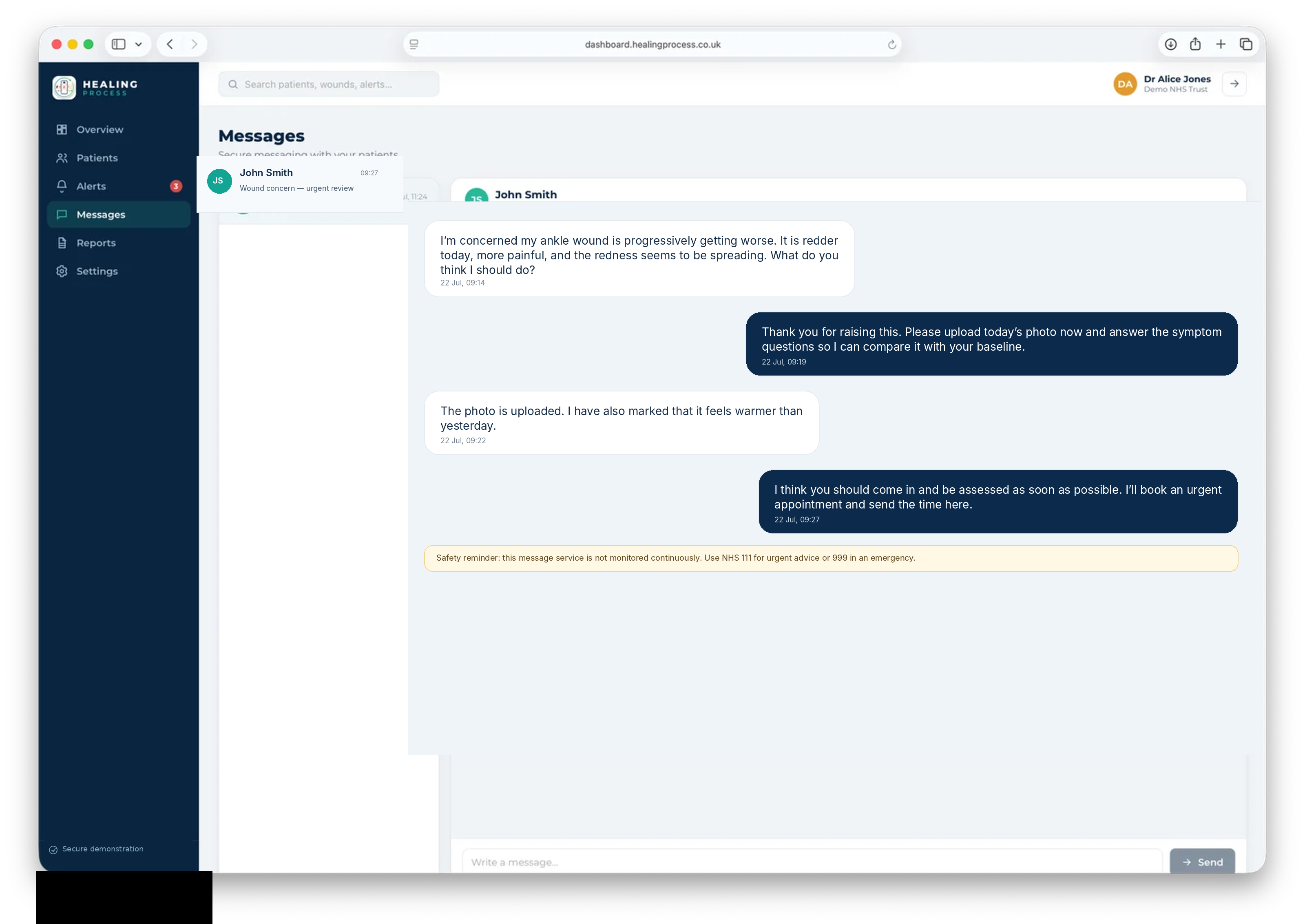
Messages should describe the concern and record the agreed action

The example conversation now shows a person reporting increased redness and pain, the clinician arranging a same-day assessment, and clear safety-netting—not repetitive small talk.
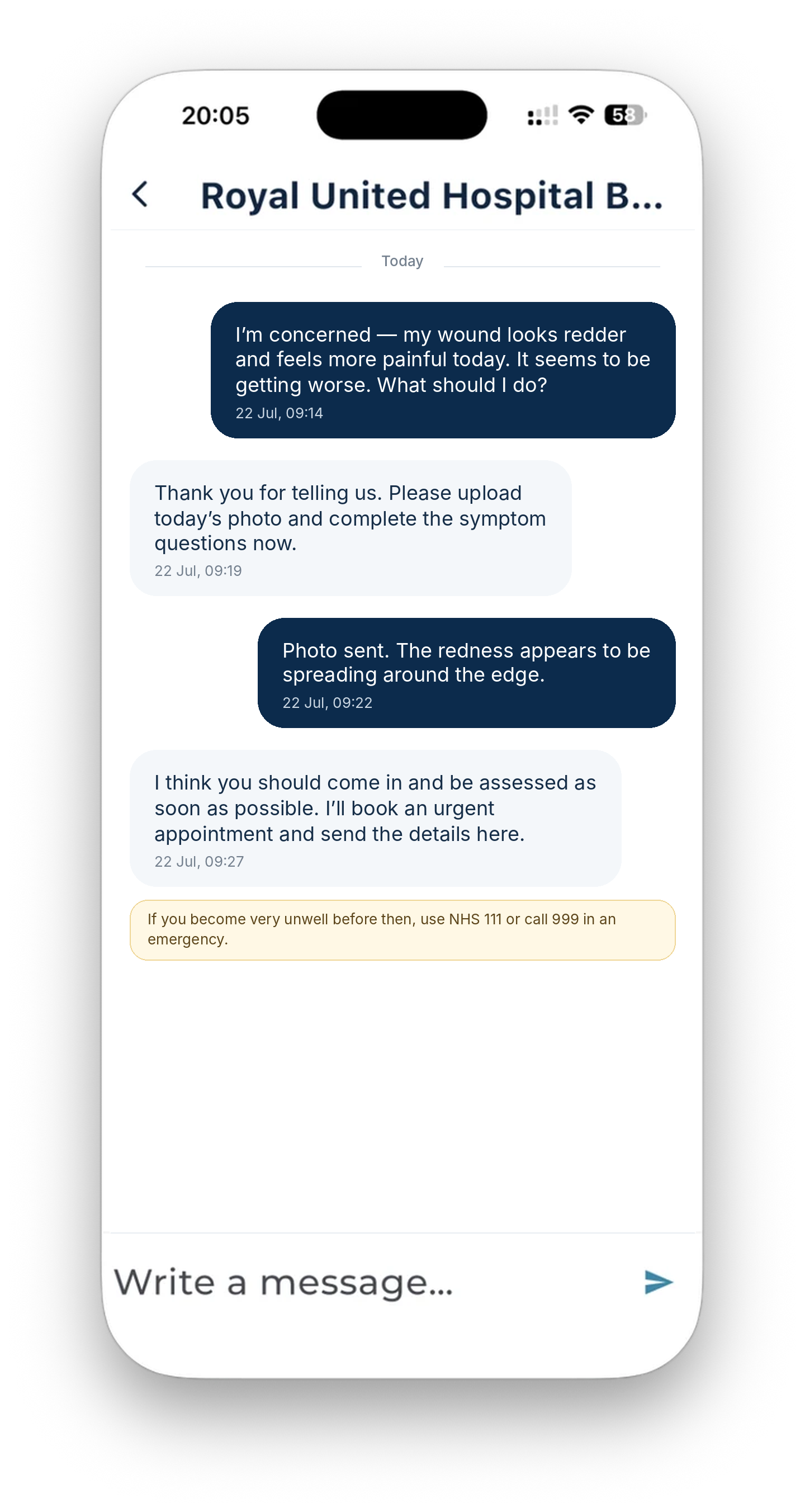
Mobile app showing a meaningful wound concern conversation
Patient and carer message viewA realistic, fictional conversation that communicates change, urgency and the next step.
Clinician dashboard showing a meaningful wound concern conversation
Clinician dashboard message viewThe same conversation appears in context beside the review queue, image history and booked appointment.

The app and clinical view

Every smaller screenshot opens full screen

Select an image to inspect it at high resolution. The viewer includes zoom in, zoom out, reset and close controls, supports Escape, and remains usable on touch screens.
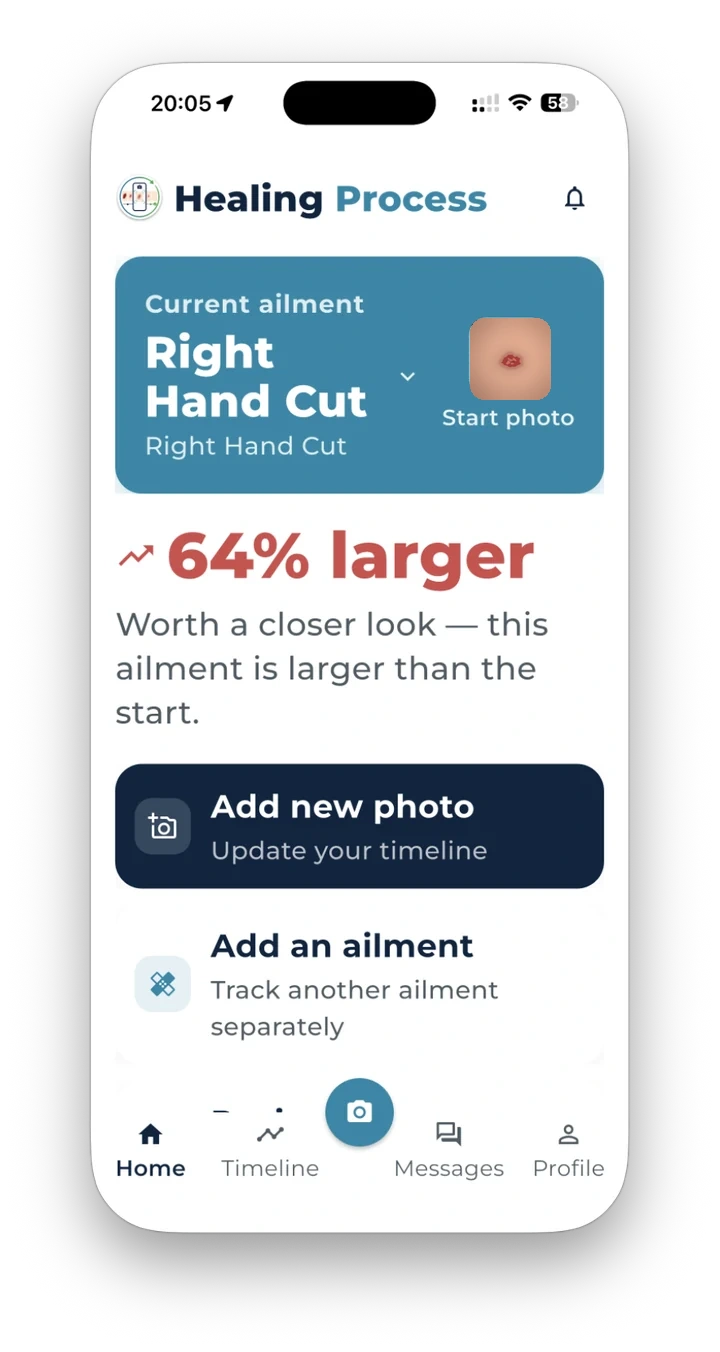
Home and next action
Home and next actionA calm home screen should show mode, next photograph and urgent-help boundary.
Guided capture
Guided captureFraming and quality prompts before submission.
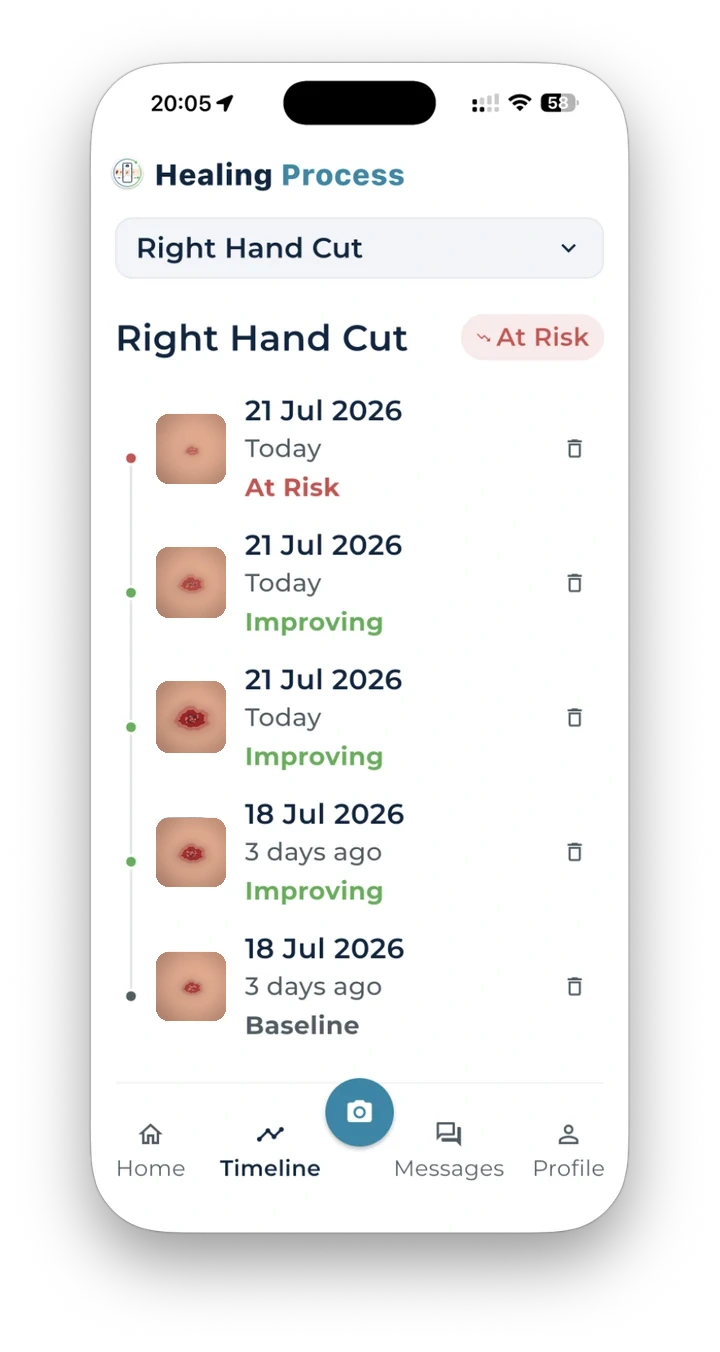
Progress timeline
Progress timelineOriginal photographs, notes and review outcomes in date order.
Profile and preferences
Profile and preferencesContact, communication, accessibility and sharing preferences.

Latest official-source topics

A governed update panel—not an uncontrolled medical advice bot

The package includes a scheduled source-monitor that can collect, date-stamp, de-duplicate and rank relevant publications from an approved list. The public cards link back to originals and do not invent clinical advice.

Prototype data snapshot: verified on 23 July 2026. The included backend must be scheduled and hosted before automatic updates are live.

Make the first review simpler

Use the product journey, safety boundary and provider checklist as the shared starting point for patients, clinicians, digital teams and governance leads.