
Intake
Identity, episode, consent, image and user concern arrive together.
For clinicians and care teams
Healing Process brings original photographs, quality information, patient-reported change, secure messages and review outcomes into one auditable view—without presenting the algorithm as the clinician.
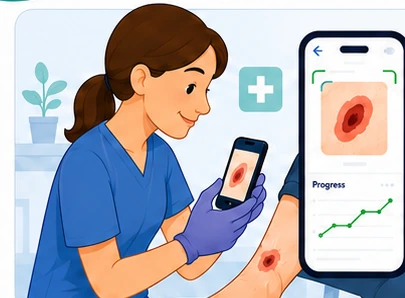
A closed-loop workflow
Identity, episode, consent, image and user concern arrive together.
Check original, capture quality, alignment and limitations.
Use protocol, reported symptoms and context—not a visual score alone.
Assess history and communicate within the defined service model.
Advise, arrange assessment, escalate or continue planned review.
Record decision, rationale, owner, safety-netting and next date.
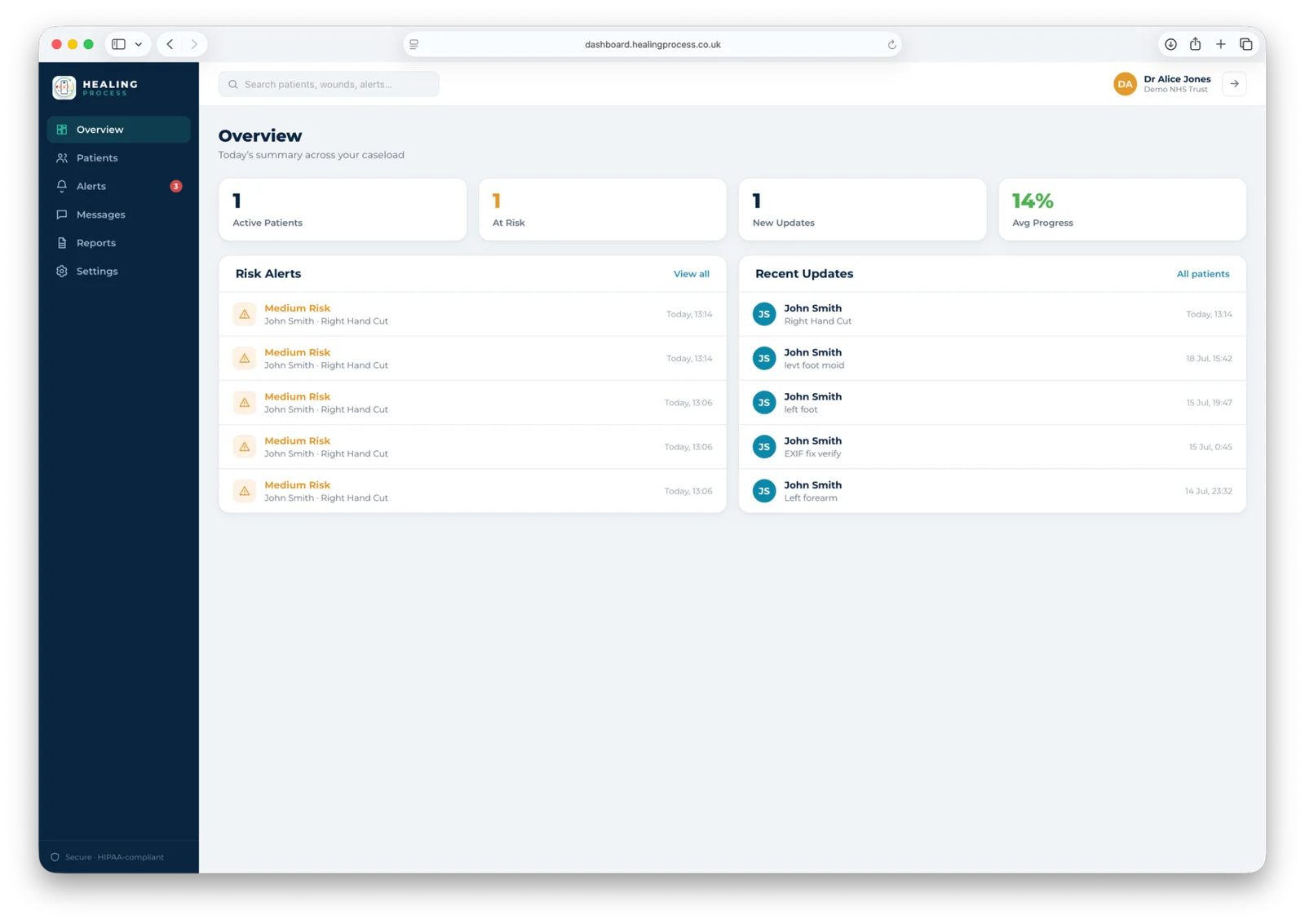
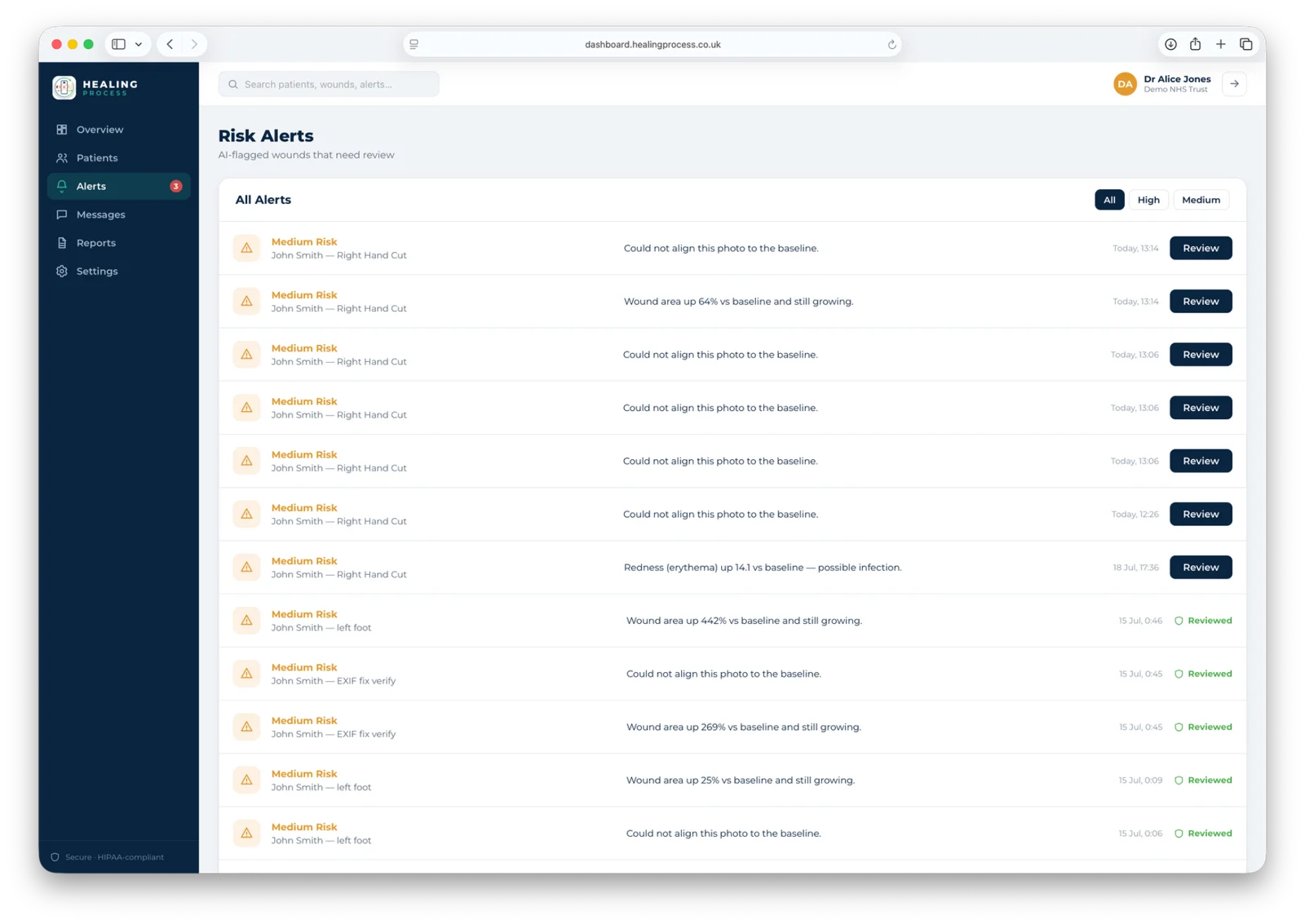
The clinical dashboard
The most important queue information should be visible before opening the full record.
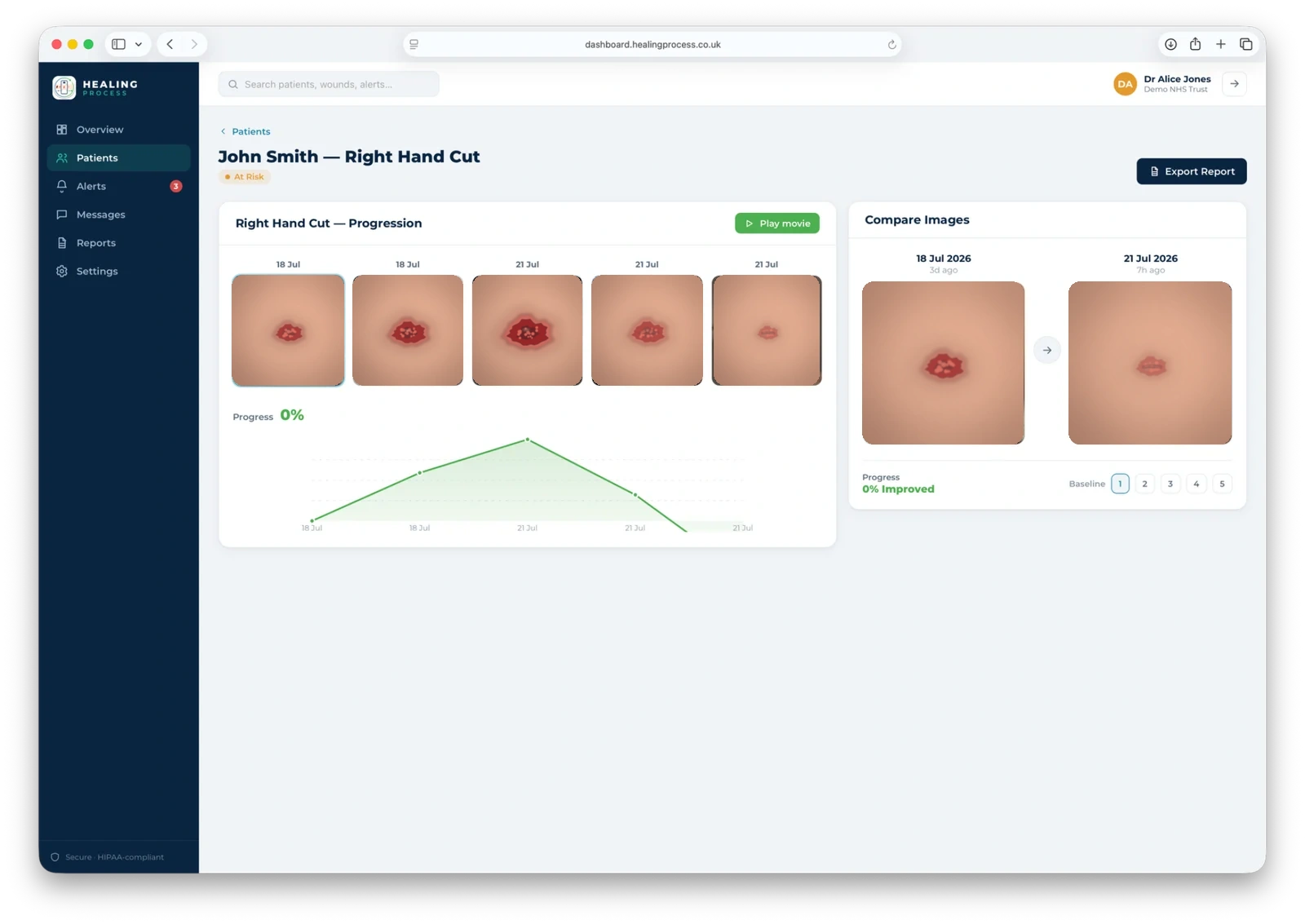
Review screen requirements
| Area | Minimum information | Safety purpose |
|---|---|---|
| Person and episode | Verified identifiers, pathway, care location, named service and review hours. | Avoid wrong-person, wrong-pathway and unmonitored assumptions. |
| Source record | Baseline original, follow-up original, date/time, device/capture data and user notes. | Preserve provenance and permit independent review. |
| Derived comparison | Method/version, alignment status, quality warnings, confidence and a clear “derived image” label. | Prevent manipulated imagery being mistaken for an original. |
| Clinical context | Relevant history supplied by the integrated record or local workflow; do not infer it from pixels. | Avoid image-only decisions. |
| Action | Reviewer identity, decision, rationale, advice, escalation, appointment and next review. | Provide a closed, auditable loop. |
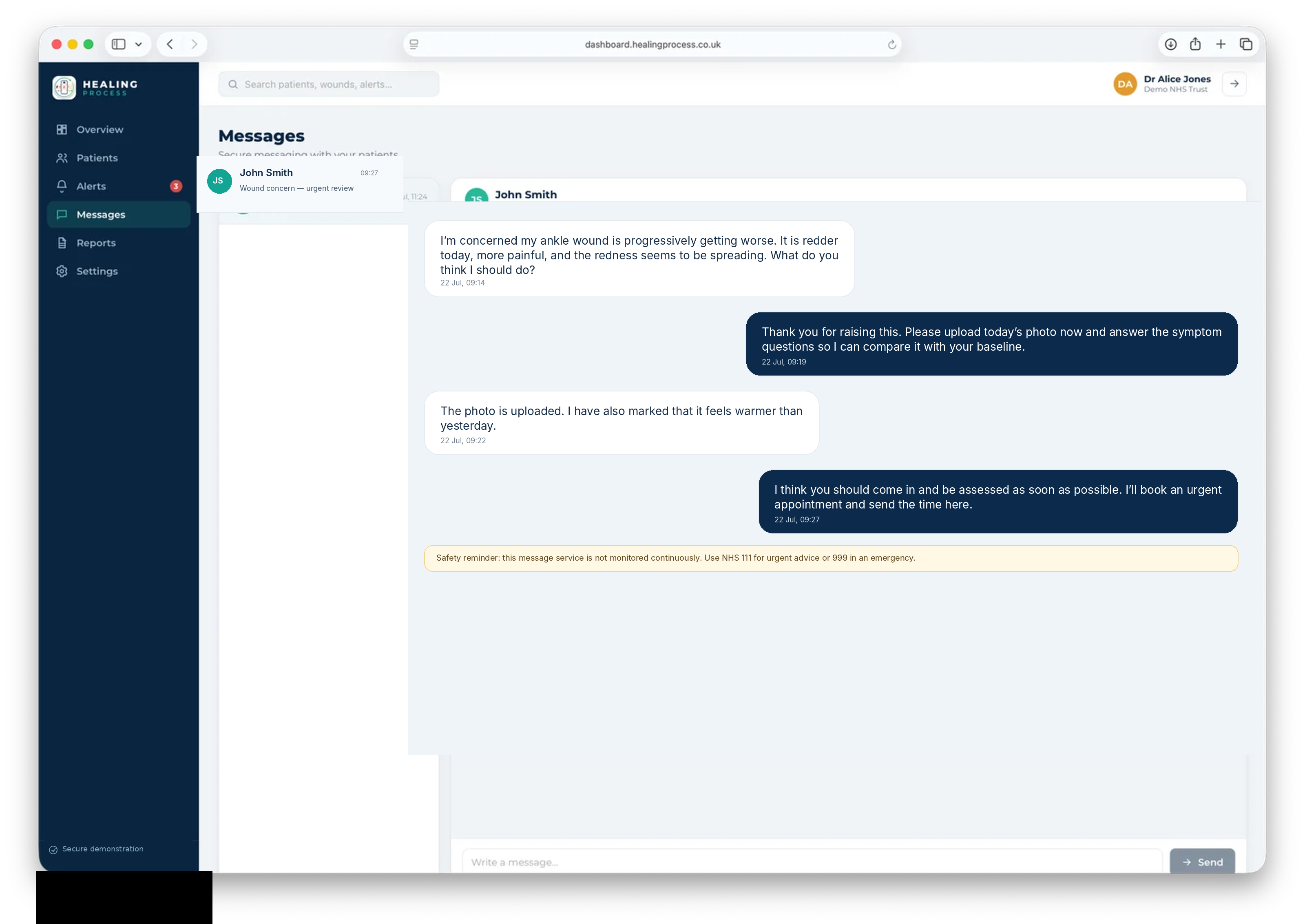
Communication example
Do not continue an asynchronous conversation where direct assessment, telephone triage or emergency escalation is needed.
Operating controls
Named clinical safety officer, service owner, data controller roles and operational rota.
Defined inclusion, exclusion, urgency, escalation, downtime and failed-contact rules.
Role-based access, training, supervision, calibration and competency records.
Clinical safety case, hazard log, DPIA, security testing, accessibility testing and post-market monitoring as applicable.
Use the provider page and deployment checklist to define the pathway, team, review windows, integration and governance before a live pilot.